Russian Archaeologists Hope to Discover Ptolemaic-Era Port in Sudan
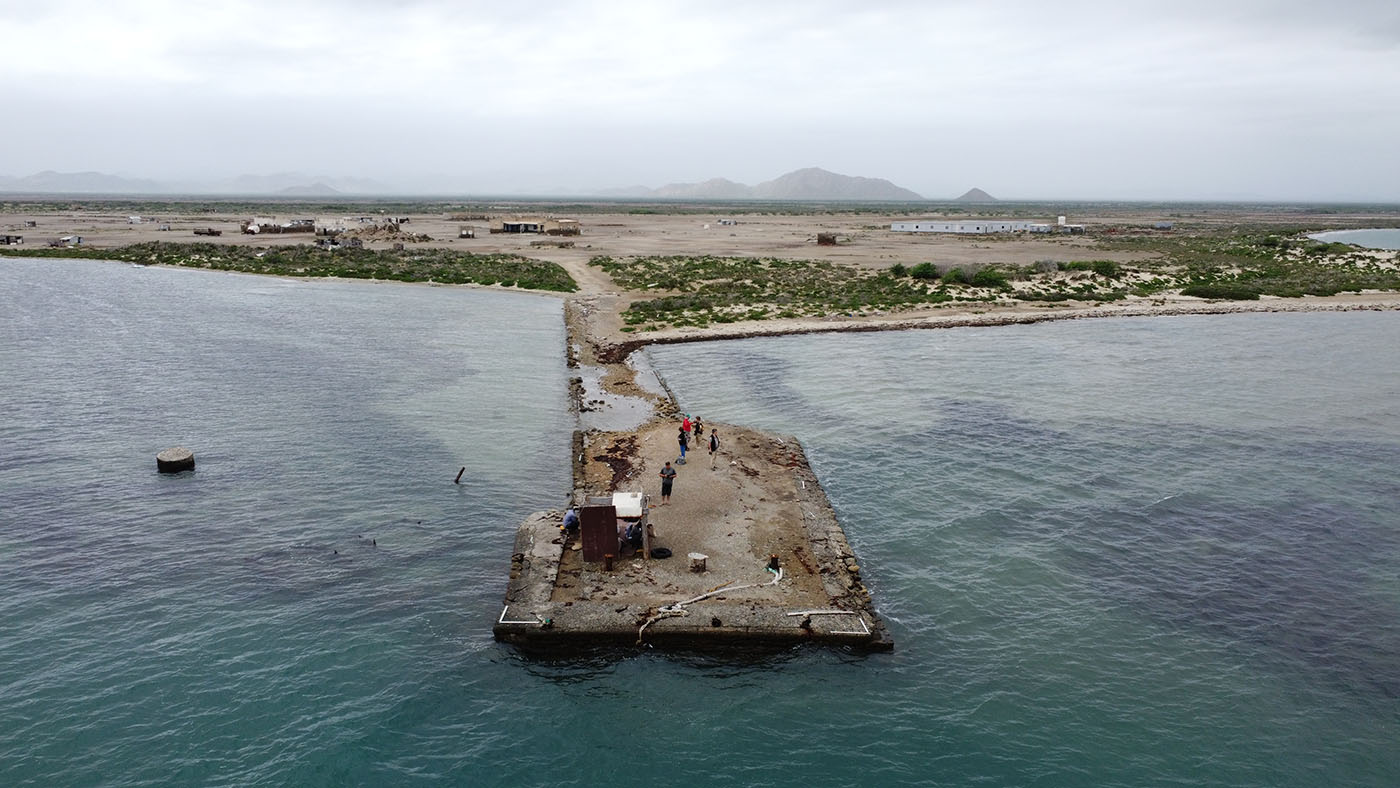
Aqik Bay
Photo: Institute of Oriental Studies of RAS
In March of 2025, a joint Russian-Sudanese expedition conducted underwater archaeological survey in the area of Khalig ‘Agig (Gulf of ‘Agig), which is located in the Republic of Sudan on the border with Eritrea. Vladimir V. Lebedinsky, head of the Centre for Historical and Archaeological Studies of Crimea and the Mediterranean at the Russian Academy of Sciences’ Institute of Oriental Studies, who led the expedition along with Eleonora E. Kormysheva, a senior researcher at the Institute of Oriental Studies, noted that the expedition had succeeded in collecting valuable archaeological material. One of the key goals of the Russian-Sudanese expedition was to train local personnel and establish a dedicated underwater archaeological research service within Sudan’s National Corporation for Antiquities and Museums.
Both underwater research at the Khalig ‘Agig pier and archaeological surveys at a land site named ‘Market’ were conducted within the Russian concession area. The site received this name due to a local tradition of referring to the area as a ‘Market’. The remains of walls and coral column drums were discovered in the nearby village of Adoban. According to Lebedinsky, “In ancient and medieval times, coral formations were used as building material. They were cut into blocks and used to construct buildings. The architectural fragments made from coral under study represent walls and carved column drums.” Thus, the architectural remains discovered by the expedition suggest the existence of a large structure, possibly of religious significance. There are currently plans to create a digital model of the coral temple and further process the collected material.
The expedition leaders think the remains of the structures uncovered during the ‘Agig expedition may reveal that this was once the site of the city of Ptolemais Theron, which is mentioned in ancient sources. This city was founded by Egyptian ruler Ptolemy II Philadelphus (c. 308–245 BC) as a base for capturing elephants and shipping them to Egypt for taming and later use in warfare.
According to Mikhail D. Bukharin, Full Member of the Russian Academy of Sciences and Lead of the Oikoumene Editorial Board, attempts to connect Ptolemais Thêrôn with ‘Agig have been ongoing for over 100 years. Counterarguments against this identification have been made in studies on the history of Red Sea trade and navigation. In any case, more thorough study is necessary before the history of this locality can be conclusively established.
Despite the information in written sources (Periplus of the Erythraean Sea, A Natural History by Pliny the Elder) indicating the distance from several reference points along the African Red Sea coast to Ptolemais Thêrôn, its exact location is extremely difficult to determine. The reports of ancient geographers are inconsistent, and Ptolemais itself, in Ptolemaic times, was not a major trading port or market but merely a landing site for elephant hunting expeditions. The history of Ptolemais was brief: by the 1st century AD, only memories of it remained. Moreover, the captured animals were likely loaded onto ships far south of the hunters’ landing site. The presence of 3rd-century BC pottery found at ‘Agig, even if this dating is correct, does not by itself indicate that Ptolemais Thêrôn was located here: there were many types of markets, and many toponyms lack a stable connection to the shoreline.
В Северной Африке планируется создание цифровой модели "кораллового" храма
В Красном море в акватории Судана провели первые подводные исследования
Ученые Института востоковедения РАН исследуют древние культуры Северной Африки в Республике Судан