Corinth
Publication date: 12.05.2025
- Region:
- Mediterranean Europe
- Timespan:
- c. 900 BC. — 1858 AD
- Coordinates:
- 37.94
22.93
CORINTH — an ancient Greek polis on the isthmus connecting Southern with Central Greece. One of the most significant economic, political, and cultural centres of the ancient Greek world.


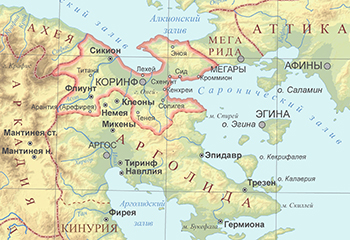
Fig. 1. Map of Corinth and its surrounding area

Fig. 2. Isthmus of Corinth.
Photo: © MmartinGaleta / Shutterstock.com

Fig. 3. Remains of the temple of Poseidon in Isthmia. Top view.
Photo: © boyoz / Shutterstock.com

Fig. 3a. Remains of the temple of Poseidon in Isthmia. East side.
Photo: KarlAllenLugmayer / Shutterstock.com

Fig. 3b. Remains of the temple of Poseidon in Isthmia. West side.
Photo: KarlAllenLugmayer / Shutterstock.com

Fig. 4. Temple of Poseidon in Isthmia (circa 690–650 BC). Reconstruction

Fig. 5. Temple of Apollo in Corinth.
Photo: © O. Vlasova

Fig. 6. Corinthian Tridrachma.
Photo: © ElCutter / Shutterstock.com

Fig. 7. Thermopylae. Modern Look.
Photo: © Konstantinos Livadas / Shutterstock.com

Fig. 8. Battle of Salamis.
Engraving from a drawing by G. Loitman

Fig. 9. Long Walls of Corinth.
Photo: © Wikipedia.org
.jpg)
Fig. 10. Battle of Potidaea.
Engraving from a drawing by A. J. Carstens, 1788
.jpg)
Fig. 11. Persian Daric.
Photo: © Wikipedia.org
.jpg)
Fig. 12. Silver Tetradrachma of Pharnabazus II (circa 413–373 BC).
Photo: © Wikipedia.org

Fig. 13. Timoleon by G. Patania. 19th Century.
Photo: ©Wikipedia.org
.jpg)
Fig. 14. Battle of Chaeronea.
In: Ollier, E. Cassell’s Illustrated Universal History. London: Cassell&Co., 1882. Pp. 486. Photo: © Archive.org
.jpg)
Fig. 15. Philip II of Macedonia. Roman Copy of the 1st Century BC from a Greek Original.
Photo: © Cromagnon / Shutterstock.com
.jpg)
Fig. 16. The Destruction of Corinth by Thomas Allom, 1870.
Photo: © Wikipedia.org

Fig. 17. Map of Corinth During the Roman Times
.jpg)
Fig. 18. Roman Thermae in Corinth.
Photo: © KarlAllenLugmayer / Shutterstock.com
.jpg)
Fig. 19. Capital of Corinthian Order.
Photo: © Morphart Creation / Shutterstock.com
.jpg)
Fig. 20. Corinthian Skyphos (circa 620–590 BC).
Photo: © Rogers Fund, 1906 / Metmuseum.org
CORINTH (Κόρινθος) — an ancient Greek polis on the isthmus connecting Southern Greece (the Peloponnese Peninsula) with Central Greece (Isthmus of Corinth). One of the most significant economic, political, and cultural centres of the ancient Greek world. Its geographical location near the centre of Greece offered inhabitants of many regions convenient access and frequently served as a venue for inter-state congresses.
Toponym’s Origin
The toponym Corinth (Κόρινθος) originates from a non-Greek substrate lexicon [Lafond, Wirbelauer 1999: 746], as indicated by the distinctive consonant cluster ‘νθ’ at the root end.
Geography and Early History
The Corinthian polis occupied the whole territory of Corinthia [Legon 2004: 465], a small historical region, bordering Sikyona to the west, Megaris to the east, and Argolis to the south (Fig. 1). South of Corinth was the rocky hill of Acrocorinth (Paus. II, 4, 6), which served as the city’s acropolis, in spite of its considerable and inconvenient elevation of 575 m [Lafond, Wirbelauer 1999: 745]. Another important site on Corinthian territory was Isthmia, with a Pan-Hellenic sanctuary of Poseidon located on the Isthmus [Gebhard 1995] (Fig. 2). The Isthmian Games were held in his honour from the Archaic Period onwards, and would eventually gain all-Greek significance (Fig. 3, 3a, 3b, 4).
The Corinthian landscape was characterised by several notable features. This was particularly true of Corinth, whose chora (territory) bordered both the Saronic Gulf of the Aegean Sea and the Corinthian Gulf of the Ionian Sea. It was one of the few states in Balkan Greece (alongside Megara) with two ports — Cenchreae to the southeast and Lechaeum to the northwest (Str. VIII, 380). While Corinth itself was not a coastal city during the Classical Period (though some scholars argue that the Corinth described in the Iliad was coastal [Ure, Hammond 1976: 290]), it marked the crossroads of important overland and maritime trade routes. The soil of Corinthia was relatively fertile by Greek standards, significantly better than that of neighbouring Megaris, though limited by the region’s small size [Berve 1967: 18]. These conditions favoured the successful development of the trade and craft sectors of the Corinthian economy (Th. I, 13, 5), which flourished from very early in Greece’s history. Homer’s Catalogue of Ships describes Corinth as wealthy (ἀφνειόν τε Κόρινθον, Hom. Il. II, 570), while Herodotus notes that in Corinth, artisans were held in higher esteem than anywhere else in Greece (Hdt. II, 167).
Settlements from the Neolithic through the Bronze Age can be traced in the area of what would later become Corinth [Lafond, Wirbelauer 1999: 746]. However, little is known about the city’s early history, including whether it even existed before the turn of the 2nd to 1st millennia BC. According to legend, ancient Corinth was identified with the city of Ephyra, associated with the mythological figures Sisyphus and Bellerophon (Paus. II, 3, 11–4, 2) — although the Iliad clearly distinguishes this Ephyra from the Corinth that was part of Agamemnon’s kingdom (Hom. Il. II, 576). Strictly speaking, the founding of Corinth is typically attributed to the Dorian migration from Argos [Ure, Hammond 1976: 290] around 900 BC [Salmon 1984: 57–58], prior to which the region was believed to have been inhabited by Aeolians (Th. IV, 42, 2). Legend names Aletes, one of the Heracleidae, as the founder and first king of Dorian Corinth (Paus. II, 4, 3). However, his descendants were known as the Bacchiads, named after Bacchis, a renowned descendant of Aletes (D. S. VII, 9, 4).
During the Early Archaic Period, the primitive monarchy was abolished and replaced by an oligarchy (Paus. II, 4, 4), with the Bacchiad family holding all authority (Hdt. V, 92). This oligarchy took an extreme form, which Aristotle’s Politics refers to as a “dynasty” (Arist. Pol. IV, 1292b11). It was characterised by 1) the limitation of state positions to individuals with significant wealth; 2) the appointment of officials through co-optation rather than election; 3) hereditary positions; 4) officials standing above the law (Arist. Pol. IV, 1292a40–1292b8). The Bacchiad regime exhibited all these traits. Members of this family even practiced endogamous marriages to consolidate their power (Hdt. V, 92).
The polis structures of Corinth were established under the Bacchiads in the 8th century BC [Stanley 1999: 128], and soon as the city had achieved considerable prosperity. By the 7th century BC, it had one of the fastest rates of development within Balkan Greece, at least. Corinth became the largest producer and exporter of painted pottery [Surikov 2017: 155–156]. Evidence of Corinth’s wealth in this time includes the construction of a temple of Apollo in the early 7th century BC [Tzonou, Morgan 2020: 728], which surpassed all earlier Greek temples in size and became a model for future Greek temple architecture with its classical peripteros and Doric order. An equally impressive temple dedicated to Poseidon was built at the sanctuary on the Isthmus, either in the early 7th century BC [Broneer 1971] or a few decades later [Salmon 1984: 180]. Corinth also had an established legal tradition. Aristotle mentions the Corinthian legislators Pheidon (Arist. Pol. II, 1265b12) and Philolaus — noting explicitly that the latter was a Bacchiad — who created a set of laws in Thebes, not Corinth (Arist. Pol, II, 1274a32 sqq.). Their activities are dated to the first half of the 7th century BC [Shishova 1991: 76, 108].
Corinth was one of the most active participants in the Greek colonisation of the 8th–6th centuries BC (seeCorinthian Colonies). The most significant of its foundations was Syracuse in Sicily. The Corinthians also built a strong navy, perhaps even before other Greek poleis. According to Thucydides, the Corinthians built the first triremes in Greece (Th. I, 13, 2). Thucydides also mentions a Corinthian shipwright (ναυπηγός) named Ameinocles, who went to Samos and built four ships there (the context indicates triremes). However, he dates this event to the late 8th century BC (Th. I, 13, 3), when such vessels probably did not yet exist. Either Thucydides’ date is incorrect, or the ships he refers to were smaller versions of triremes (light and fast penteconters were mainly used on Samos in later times (Hdt. III, 39)).
Corinth took part in one of the most significant events of Early Archaic Greek history—the protracted Lelantine War of the 8th–7th centuries BC [Parker 1997] between the Euboean city-states of Eretria and Chalcis (Thgn. 891–894). Written sources about this event are scarce, making it difficult to study. The side supported by Corinth remains a point of discussion. It is possible that the Corinthians under the Bacchiads allied themselves with the Chalcidians (see Plu. Mor. 293ab, according to whom the Corinthian colonists exhibited hostility toward the Eretrians), and later, under the Cypselids, with the Eretrians (cf. Hdt. I, 20, where the Cypselid Periander appears as a close friend of Thrasybulus, the tyrant of Miletus, an ally of Eretria).
Friendship with Sparta and Athens
In 657 BC, the Bacchiads fell, and Corinth began to be governed by the Cypselid tyrants, one of the most famous tyrannies in the Archaic Greek world and a striking chapter in Corinthian history. The Cypselids (led by Cypselus, Periander, and Psammetichus) were overthrown in 582 BC, following which a moderate oligarchy was established in the polis [Lafond, Wirbelauer 1999: 746]. The most influential governing body in this administration was the Council of Eighty, which included eight ‘probouloi’ (magistrates) forming a presidium, together with 72 ordinary members (Nic. Dam. FGrHist. 90, F60). These numbers — multiples of eight — were undoubtedly linked to the number of Corinthian phylai. Along the same lines, the armed forces were led by a collegium of eight ‘strategoi’ (strategists) [Salmon 1984: 232–233]. The administration also included a public assembly known as the ‘syllogos’ (Th. V, 30, 5), whose role, however, was not as significant as that of the Council and strategoi. This oligarchic government proved remarkably stable, and lasted almost continuously for many centuries [Legon 2004: 467], with the exception of a brief democratic interlude in 392–386 BC, and a new attempt to establish a tyranny in 366 BC (see below).
Corinth’s economic prosperity continued under the oligarchy, which was based on the principle of property qualification (encouraging citizens to accumulate wealth) [Ure, Hammond 1976: 290]. In the mid-6th century BC, a new, grander temple of Apollo was built in the city centre (parts of the colonnade still remain standing as one of the most spectacular sights in Corinth, if not all of Greece[Sanders et al. 2018: 38–39]), replacing an older structure (Fig. 5). In pottery production and vase painting of this century, however, the Corinthians were steadily overtaken by the Athenians [Surikov 2017: 159].
It is only in this period that Corinth began minting silver coins (and not under the Cypselids, as previously believed [Head 1911: 399–400]). Nevertheless, the Corinthian mint is among the oldest in Balkan Greece (the second to emerge after the Aeginetan mint [Kroll, Waggoner 1984]), having started its operation around the mid-6th century BC or slightly later. Corinthian coin types were exceptionally long-lived: the obverse featured the winged horse Pegasus (associated with the feats of Bellerophon, one of the most revered Corinthian mythological heroes) and a legend in the form of the Archaic Greek alphabet letter qoppa (Ϟ), which corresponded to the city’s ancient name. The reverse showed the head of the goddess Athena in a helmet [Legon 2004: 468] (Fig. 6).
The Peloponnesian League was formed over the course of the 6th century BC under the hegemony of Sparta. Corinth was an early member, having joined by the middle of the 6th century [Legon 2004: 466]. For the most part, Corinth remained one of Sparta’s most loyal allies. For instance, Corinth was the only ally to participate in the failed Spartan naval expedition of ca. 525 BC against the tyrant of Samos, Polycrates (Hdt. III, 48). At the same time, the wealth and influence of Corinth made it the second most influential member of the league after Sparta. The opinions of Corinthian representatives were highly respected at the allied congresses (Hdt. V, 92–93; Th. I, 67–72; I, 119–125), enabling the city to often pursue its own agenda within this military-political union [Lafond, Wirbelauer 1999: 746].
A notable feature of Corinth’s foreign policy in the late 6th and early 5th centuries BC was the emphasis on maintaining strong relations with Athens. According to Herodotus, ‘the Corinthians at that time were their (i.e. Athenians’) close friends’ (Οἱ δὲ Κορίνθιοι ἦσαν… τοῦτον τὸν χρόνον φίλοι ἐς τὰ μάλιστα Ἀθηναίοισι (Hdt. VI, 89)). This friendship stemmed in part from the situation in Megara — a ‘buffer’ polis between Attica and Corinthia perceived as hostile by both Athens and Corinth [Surikov 2011: 299]. Corinth’s oligarchy inherited its goodwill toward Athens from the Cypselids, who, in turn, held familial ties with one of Athens’ most influential aristocratic families, the Philaidae (Hdt. VI, 128; cf. the name of Cypselus in Philaidae onomasticon (Hdt. VI, 34)). Periander, for example, served as arbiter in a dispute between Athens and Mytilene over the city of Sigeion in the Troad, and awarded it to Athens (Hdt. V, 95).
In the late Archaic Period, Corinth repeatedly offered Athens its crucial and palpable support. Around 519 BC, the city of Plataea in Boeotia came under the protection of Athens [Badian 1993: 109–123]. Thebes, the hegemon of the Boeotian League, was outraged and responded with military action. The conflict was resolved with the help of the Corinthians, whom the warring parties invited to act as arbitrators (for details, see: [Hening 1992]). The Corinthian arbitration ruled against the Thebans: they were instructed to relinquish their claims to Plataea, and to leave those Boeotian cities unwilling to recognise Theban supremacy in peace (Hdt. VI, 108).
Around 506 BC, an army of the Peloponnesian League under the leadership of the Spartan kings Cleomenes I and Demaratus was sent to Athens with the aim of punishing the city and dismantling the democracy recently established there by Cleisthenes (Arist. Pol. 22, 1). The operation did not succeed, largely due to the actions of Corinth. After the Peloponnesians had entered Attica and seized Eleusis, the Corinthians withdrew their contingent, stating they considered the campaign unjust (Hdt. V, 75). This was further exacerbated by a disagreement between the Spartan commanders (with Demaratus also departing from the army). The remaining polis contingents disbanded, and the campaign was ultimately abandoned (Hdt. V, 76).
A few years later, Spartan King Cleomenes developed a plan to return Hippias to power in Athens (the former tyrant was deposed in 510 BC). Hippias was summoned to Sparta, where a Congress of the Peloponnesian League was convened (Hdt. V, 91). However, the Corinthians fiercely opposed this plan. Corinthian representative Socles delivered a passionate speech urging Spartans not to tarnish their reputation by supporting tyranny (Hdt. V, 92). Other allies were initially silent, but soon sided with Socles (Hdt. V, 93). This resistance, led by Corinth, saved the Athenian democracy. Interestingly, this congress was likely the first formal meeting of the Spartan-led alliance (symmachia), setting a precedent for Corinth’s independent and oppositional stance in the league [Cawkwell 1993]. As such, it is only characteristic that Corinth took an emphatically independent position even at the first congress of representatives of the allied polities, acting, in fact, as the ‘internal opposition’ against the Spartan authorities — a theme which would later repeat itself [Bolmarcich 2005]. The Corinthians were lobbying for Athenian interests on this occasion, but — as Hippias prophetically warned — would later come to regret supporting democratic Athens (Hdt. V, 93).
Around 490 BC, Aegina agreed to submit to the Achaemenid Empire (Hdt. VI, 49), escalating tensions between itself and Athens and leading to armed conflict. Corinth provided military assistance to Athens, supplying them 20 triremes (selling them to Athens for a symbolic price of 5 drachmas per ship, as Corinthian law prohibited the gifting of warships (Hdt. VI, 89)). This support was crucial. Unlike Aegina, whose fleet was one of the most powerful in the Aegean, Athens itself possessed only 50 triremes (D. S. VII, 11). Around the same time, the Corinthians acted as mediators in negotiations between Gela, ruled by the tyrant Gelon, and Syracuse (a colony of Corinth), to end the war in Sicily. While Gelon emerged victorious, the Corinthians managed to secure relatively favourable peace terms for Syracuse (Hdt. VII, 154).
These events took place during the Greco-Persian Wars (500–449 BC), in which Corinth played an active role, and theirs was the third most substantial contribution to the Greek victory after Athens and Sparta [Surikov 2011: 300]. At that time, the most influential political figure in Corinth was Adeimantus (Hdt. VIII, 5), one of the principal leaders in the resistance against the Achaemenid Empire alongside Themistocles, Pausanias, Leotychidas, and others. Plutarch preserved his epitaph: ‘Here buried Adeimantus lies, and thanks to him all Greece put Freedom’s crown upon her head’ (Plu. Mor. 870f). In 481 BC, an alliance of Greek states led by Sparta was formed in anticipation of an attack by Persian King Xerxes I. This alliance was established at a congress held on Corinthian territory at the sanctuary on the Isthmus (Hdt. VII, 145), where subsequent congresses would also be convened (Hdt. VII, 175; VIII, 123; IX, 15). While scholarship sometimes refers to this coalition as the ‘Corinthian League’ [Lafond, Wirbelauer 1999: 746], the term ‘Hellenic League’ [Kienast 2003] is used more regularly and will be adopted here.
Corinth, of course, immediately became a member of the Hellenic League, contributing contingents to all major battles taking place from 480–479 BC. This includes the 400 hoplites from Corinth who joined the Greek army under the Spartan King Leonidas I (Hdt. VII, 202) to defend Thermopylae (see Thermopylae) (Fig. 7). However, the Corinthians were most active during the naval campaign of 480 BC, when they contributed 40 ships to the fleet of the Hellenic League, making their squadron the second largest following the Athenian contingent. This flotilla was commanded by Adeimantus (Hdt. VIII, 5). It is worth noting that Herodotus, who was influenced by the anti-Corinthian bias (prevalent in contemporary Athens), downplays the courage of Corinthian warriors and commanders in his account of Xerxes’ campaign, even resorting to slander (Plu. Mor. 870e–f). According to him, the Corinthians adopted a defeatist stance even before the Battle of Artemisium, and Adeimantus even intended to withdraw from the allied forces and return home, and stayed back only after receiving a bribe of three talents from the Athenian commander Themistocles (Hdt. VIII, 5).
The fleet would retreat from Euboea to Salamis following the inconclusive battle, with the Corinthian squadron leading the way and the Athenian squadron following up last (Hdt. VIII, 21). This arrangement, however, cannot be attributed to Corinthian cowardice, as Herodotus implies, but rather to military and tactical considerations taken in the interests of general security — the two largest squadrons were placed in the vanguard and rearguard, with the largest in the rearguard, as the main threat would come from the rear (the Persians) [Salmon 1984: 254].
At the Battle of Salamis, the Corinthian fleet still stood at 40 triremes (Hdt. VIII, 43). By this time, reinforcements had arrived and the Greek contingent grown (Hdt. VIII, 42). The number of polis squadrons had also increased (the Athenian one from 127 to 180, the Aeginetan one from 18 to 30, the Spartan one from 10 to 16, the Sicyon one from 12 to 15, etc.), and the total number increased by about a hundred ships (Hdt. VIII, 48). However, we must not forget that the Greeks were joined at this stage by two small squadrons from the colonies of Corinth (among others), including seven ships from Ambracia and three from Lefkada (Hdt. VIII, 45). In the war councils led by the Spartan navarch (ναύαρχος, admiral) Eurybiades (Hdt. VIII, 49), Adeimantus would frequently clash with Themistocles in heated debates — sometimes escalating to insults (Hdt. VIII, 59; 61) — consistently advocating to abandon Salamis and retreat eastward to the Isthmus (Hdt. VIII, 79), where a defensive wall to protect the Peloponnesus was already under construction (Hdt. VIII, 71) — a project in which the Corinthians also participated (Hdt. VIII, 72).
Themistocles persevered, and achieved a naval victory over the Persians at Salamis (Fig. 8). Herodotus’ account of the actions of the Corinthian squadron led by Adeimantus is especially prejudiced [Surikov 2011: 316–318]. The Corinthians are depicted as cowards fleeing at the very beginning of the battle, and returning only upon its conclusion (Hdt. VIII, 94). However, the historian explicitly notes this to be the Athenian version of events, and that others testified that the Corinthians ‘have been among the foremost in the battle’ (ἐν πρώτοισι… τῆς ναυμαχίης… γενέσθαι). Some scholars suggest that the Corinthian retreat from their positions was part of a pre-planned manoeuvre to draw the enemy in [Salmon 1984: 254–255]. In any case, there can be no question of any cowardice on their part. On the contrary, the valour of the Corinthians is confirmed by a laudatory poetic inscription installed in their honour on Salamis (IG. I3. 1143), in spite of the fact that the island was under the control of Athens in the 5th century BC. An inscribed commemoration of this kind could not have been made at this time without the permission of the authorities. This allows us to conclude that the anti-Corinthian narrative of this battle developed in Athenians’ circles at a later time [Surikov 2011: 318], in connection with deteriorating Athenian-Corinthian relations closer to the mid-5th century BC (see below).
In 479 BC, Corinth established a gathering point on the Isthmus, where the land army of the Hellenic League would assemble under the command of Spartan regent Pausanias (Hdt. IX, 19). This force subsequently marched to Boeotia to confront the Persian nobleman Mardonius, culminating in the decisive Battle of Plataea (see Plataea). The Corinthian contingent to the Greek forces numbered 5,000 hoplites (Hdt. IX, 28), making it the third largest after the Spartan and Athenian contingents. Herodotus provides a mixed assessment of the Corinthian contingent’s role in the battle. On the one hand, he notes that Mardonius deployed the Medes — a Persian army faction traditionally regarded as highly capable — against the Corinthians (Hdt. IX, 31). This suggests that Mardonius held the Corinthian forces in high regard. On the other hand, Herodotus depicts the Corinthians’ during the actual battle in unfavourable terms. He credits the victory solely to the efforts of the Spartans, Athenians, and Tegeans (Hdt. IX, 59–62). According to him, the Corinthian hoplites initially stood alongside troops from other city-states ‘near the sanctuary of Hera and did not participate in the battle’, instead rushing in to plunder the enemy camp only after learning of the Persian defeat (Hdt. IX, 69). This portrayal reflects a Herodotean bias. More recent evidence, however, paints a different picture. Newly discovered fragments of a poem on the Battle of Plataea by Simonides of Ceos, a contemporary of the events, suggest that the Corinthian contribution was more meaningful than Herodotus acknowledged. These fragments (published in 1992) offer a narrative that counters the historian’s depiction and highlights the complexity of the battle’s dynamics [Boedeker 2001: 125].
In the same year, a Corinthian squadron (its exact size is unknown, but probably substantial) joined the Hellenic League’s naval expedition led by Spartan King Leotychidas II along the eastern coast of the Aegean Sea (Hdt. IX, 95). Corinthian sailors participated in the Battle of Mycale (Hdt. IX, 102) and performed notably. Herodotus even ranks them second only to the Athenians among all the Greek contingents in this battle (Hdt. IX, 105), demonstrating a rare instance of impartiality in his account. Following this success, Corinth — like other members of the Peloponnesian League — withdrew from active participation in the Greco-Persian Wars after 478 BC [Surikov 2011: 300]. This marked the end of the important Corinthian military contributions to the conflict, and the focus of resistance would shift to other Greek city-states and leagues.
Rift and Hostility with Athens
Soon after, the relationship between Corinth and Athens began deteriorating in earnest [Lafond, Wirbelauer 1999: 746]. This can be attributed to the expansionist ambitions of Athens to some extent (the establishment and strengthening of the Delian League, which eventually evolved into the Athenian archê), which evoked concern among the Corinthians [Ure, Hammond 1976: 290]. The rupture grew gradually, influenced by various factors. In the 460s BC, Cimon, the leading figure in Athens at the time, fostered strong ties with Corinth’s ally Sparta and created an Athenian-Spartan dualism in Greece (Plu. Cim. 16). However, this ‘bipolar world’ marginalised Corinth, a state previously belonging to the ‘upper echelon’ and accustomed to playing a significant and independent role; Corinth was now forced into a secondary position overshadowed by the two ‘superpowers’, and would therefore grow increasingly resentful of Cimon’s policies [Surikov 2011: 301].
The first open manifestation of tensions between Corinth and Athens occurred in 467 BC (for dating, see [Badian 1993: 100]). Cimon, upon returning from his first campaign of assisting Sparta against the rebelling helots (the Third Messenian War), had to pass through Corinthia. Corinthian general Lachartus attempted to block his passage but failed (Plu. Cim. 17). However, Corinth’s definitive shift to an anti-Athenian position occurred after Cimon’s ostracism in 461 BC [Bayer, Heideking 1975: 121] and the rise to power in Athens of radical democratic politicians opposing Sparta. This transition was driven primarily by two events, which Thucydides describes as marking the onset of Corinth’s ‘vehement hatred… against the Athenians’ (Κορινθίοις… τὸ σφοδρὸν μῖσος ἤρξατο πρῶτον ἐς ᾿Αθηναίους γενέσθαι (Th. I, 103, 4)).
The first of these was when Athens extended its sphere of influence in 459 BC to include Megara. Megara had defected from the Peloponnesian League to join the Athenians as the result of a border conflict with Corinth (Th. I, 103, 4). By controlling Megaris, which was also situated on the Isthmus, Athens had effectively cut off the Peloponnesians from Central Greece while gaining access to the Corinthian Gulf (Th. I, 111, 2), where the Corinthian navy had previously dominated. The second important event was Athens’ capture of Naupactus, an important port on the northern coast of the Corinthian Gulf (in western Locris), where Athens would settle the helots expelled by the Spartans from Messenia (Th. I, 103, 3). The dating of this event is debated: it may have occurred either shortly before 460 BC [Salmon 1984: 257 ff.] or around 457 BC [Badian 1993: 163 ff.]. In either case, Athens’ control of this naval base further consolidated its position in the Gulf, undermining Corinth’s influence, and the latter would begin to oppose Athens at every opportunity [Strogetskii 1991: 124].
Corinth played an active role alongside Sparta during the First Peloponnesian War (459–446 BC). The Corinthian Long Walls (dating to the mid-5th century BC [Legon 2004: 467]) were likely constructed during this period, and connected the city to its northern port of Lechaeum (Fig. 9). In 458 BC, a Corinthian contingent, together with forces from Epidaurus, jointly defeated an Athenian detachment that had landed at Halieis (Eastern Argolis) (Th. I, 105, 1). That same year, Corinthian troops launched an assault on Megarian territory (Th. I, 105, 3), anticipating that Athens would not be able to assist its new allies as Athenian forces were engaged elsewhere: some in the siege of Aegina (Th. I, 105, 2), and others in support of Egypt’s revolt against Achaemenid rule (Th. I, 104). However, Athens did manage to assemble a force composed of older and younger citizens who had been exempt from the campaigns at Aegina or Egypt (οἵ τε πρεσβύτατοι καὶ οἱ νεώτατοι (Th. I, 105, 4)). Under the command of Myronides — of advanced age himself — this force defeated the Corinthians at the Battle of Kimolia near Megara (Th. I, 105, 5–6). The Corinthians suffered heavy losses and returned to their city (Th. I, 106). In 457 or 456 BC, the Athenian squadron commanded by the strategos Tolmides sailed around the Peloponnese and captured the Corinthian fortification of Chalcis on the southern coast of Aetolia, at the entrance to the Corinthian Gulf (Th. I, 108, 4). This strategic position would remain under Athenian control until as late as 429 BC [Freitag et al. 2004: 383].
In 446 BC, Megara severed its alliance with Athens, massacred the Athenian garrison stationed in the city, and requested Corinthian forces for support (Th. I, 114, 1). That same year, the Thirty Years’ Peace was signed, ending the First Peloponnesian War and delineating the spheres of influence of the Athenian archê and the Peloponnesian League [Bengtson 1962: 74 ff.]. According to the terms of the treaty, Megara would rejoin the Peloponnesian League, effectively closing Athens’ access to the Corinthian Gulf — likely much to the satisfaction of Corinth. According to some scholars, it was this step that eliminated the tension between Athens and Corinth, restoring amicable relations between the two [Salmon 1984: 268]. However, this view is debatable. Following the Thirty Years’ Peace, Periclean Athens intensified its activities in the Central Mediterranean (Southern Italy and Sicily), i.e. outside its traditional sphere of influence [Strogetskii 1999]. This expansionist policy probably led to increased dissatisfaction, particularly on the part of Corinth, which had long-standing interests in the Italic-Sicilian region. Thus, the period in the history of Athenian-Corinthian relations, from 446 to 433 BC, can be characterised as one of tense and distrustful neutrality [Surikov 2011: 303].
Corinth played a pivotal role in the events leading up to the Peloponnesian War (431–404 BC); its immediate triggers were the Corcyra and Potidaean incidents of the late 430s (see Corinthian Colonies), which escalated Athenian-Corinthian hostilities (Fig. 10). At Corinth’s urging, the Peloponnesian League convened a congress in 432 BC (Th. I, 67, 1), during which Corinthian representatives vehemently advocated to end peaceful relations with Athens (Th. I, 68–71). Thus Corinth, alongside Athens, played a central role in unleashing the war, while Sparta, in contrast, undertook everything to avoid the conflict (Th. I, 139, 1). The congress declared the Thirty Years’ Peace null and void due to Athenian actions (Th. I, 87, 4), and war was officially declared later in the year (Th. I, 125). However, the first campaign would only begin in earnest in the spring of the following year (Th. II, 10, 1).
During the Peloponnesian War
The intense hostility of Corinth towards Athens led to its active participation in the war alongside Sparta. Corinth mainly contributed squadrons to the allied fleet (Th. II, 9, 3) but occasionally deployed substantial units of hoplites, e.g. a unit numbering 2,700 soldiers in 424 BC (Th. IV, 70, 1). This involvement came at a high cost [Lafond, Wirbelauer 1999: 746], as Corinth’s chora and land holdings beyond its borders were often turned into battlegrounds. As early as 431 BC, the Athenian squadron circling the Peloponnese had captured several Corinthian strongholds in Acarnania, including the city of Astacus (Th. II, 30, 1), which, however, was soon returned to Corinthian control (Th. II, 33, 1–2). In 430 BC, Aristaeus (Th. II, 67, 4), the most influential political and military leader in Corinth at the time, fell into the hands of the Athenians in Thrace, where he had been serving as an envoy to Persia (Th. II, 67, 1–3), and was summarily executed by them.
In the winter of 430–429 BC, the Athenian general Phormio arrived in Naupactus with twenty ships ordered to block enemy naval movements through the Gulf of Corinth to and from Corinth (Th. II, 69, 1). Phormio conducted a highly successful operation in 430 BC [Lazenby 2004: 45], targeting a Corinthian squadron of 47 ships (Th. II, 83, 3) headed to join the main Peloponnesian fleet under Spartan admiral Cnemus in the Ionian Sea (Th. II, 83, 1–3). Corinthian commanders Machaon, Isocrates, and Agatharchides (Th. II, 83, 4) had underestimated Phormio, assuming he would not engage their numerically superior fleet. However, Phormio took the initiative (Th. II, 83, 2). At night, the Corinthian ships, having passed Naupactus, sailed along the southern shore of the Corinthian Gulf, while Phormio’s triremes mirrored their movement along the northern shore. Passing the narrow straits between the promontories of Rhium and Antirrhium, the fleets reached Patras (in Achaea) and Chalcis (in Aetolia), respectively. When the Corinthian squadron turned north, Phormio intercepted them, leading to a naval clash in the middle of the gulf (Th. II, 83, 3).
The Corinthian fleet employed a well-tested circular formation during the Battle of Naupactus, positioning the bows of their triremes outward to protect smaller vessels inside the circle. Five elite ships were held in reserve for strategic flexibility (Th. II, 83, 5). In spite of the numerical advantage of Corinthian fleet’s, the strategy failed due to the exceptional naval tactics of the Athenian commander Phormio. His fleet, arranged in single file, circled the Corinthian formation at close range without attacking, pressuring the Corinthian ships to backpedal while he awaited the right moment (Th. II, 84, 1). At dawn, strong winds disrupted the Corinthian formation, and Phormio seized the opportunity to deliver a decisive strike. The Athenians captured 12 Corinthian ships with their crews (Th. II, 84, 4) and destroyed or incapacitated most of the remainder. The remnants of the Corinthian fleet fled to Cyllene (in Elis), where the navarch Cnemus was stationed at the time (Th. II, 84, 5).
Cnemus was held responsible for the defeat. The Spartan authorities reprimanded him and assigned a group of observers, including the notable general Brasidas, to oversee his actions (Th. II, 85, 1). Cnemus had underestimated Phormio’s willingness to engage with smaller forces, and failed to organise support for the squadron from the western fleet [Lazenby 2004: 45]. The battle at Naupactus marked the first naval clash of the Peloponnesian War (Th. II, 85, 2). A second engagement at Naupactus followed shortly after, in which Phormio defeated Cnemus’s entire fleet (77 ships) and forced it to retreat to Corinth with significant losses (Th. II, 92, 6). While in Corinth, Cnemus and Brasidas conceived a bold plan to attack Athens’ primary port, Piraeus, by surprise (Th. II, 93, 1). Since their ships were in Lechaeum instead of Cenchreae, Corinthian sailors had to carry their oars by foot in the night to Megara, where 40 triremes awaited them in the harbour of Nisaea (Th. II, 93, 2). However, their scheme was hampered by delay, and the Peloponnesians instead resorted to ravaging Salamis, capturing three Athenian ships in the process (Th. II, 93, 4) before retreating through Megara to Corinth (Th. II, 94, 3–4).
In 425 BC, the Athenians, led by general Nicias, launched a naval expedition against Corinth. The force of 2,000 hoplites and 200 cavalrymen was transported on 80 ships (Th. IV, 42, 1), and specially equipped vessels were prepared for carrying the horses — a novel tactical innovation that drew the attention of contemporaries, including a mention in the following year by Aristophanes in his comedy The Knights (Ar. Eq. 595 sqq.). The Athenian army landed at Solygeia, near the Isthmus (Th. IV, 42, 2). Corinthian authorities, having been warned of the impending invasion, had mobilised their militia in advance (Th. IV, 42, 3). Half of their forces marched to confront the Athenians, while the other half remained behind to defend Cenchreae against any potential surprise attack (Th. IV, 42, 4).
Thus began the battle of Solygeia — a fierce and prolonged encounter (Th. IV, 43). Eventually, the Athenians forced the Corinthians to retreat (Th. IV, 44, 1–2) and began erecting a trophy to mark their victory (Th. IV, 44, 3). However, the arrival of reinforcements for the Corinthians compelled Nicias to withdraw his troops to their ships and retreat (Th. IV, 44, 4–5). After withdrawing, the Athenians realised that the bodies of two fallen Athenian soldiers had been left on the battlefield. The Athenian commander had to conclude a truce with the enemy in order to recover them for burial. This was seen as an admission of defeat (Plu. Nic. 6), although the Athenians had in fact secured a victory, losing fewer than 50 people in the process, as compared to 212 on the Corinthian side (Th. IV, 44, 6), including Corinthian general Lycophron (Th. IV, 44, 2). Leaving the dead unburied was considered a severe violation of religious norms, and Nicias’ actions reflected his heightened sense of piety [Surikov 2012: 149–150]. Nonetheless, the Athenians would ravage several villages in Corinthian territory before returning home following the truce (Th. IV, 45, 1).
In 421 BC, Athens and Sparta signed the Peace of Nicias (for the full text of the treaty, seeTh. V, 18–19), concluding the first phase of the Peloponnesian War (the Archidamian War). Corinth was among the members of the Peloponnesian League who opposed this treaty (Th. V, 17, 2) and refused to sign it (Th. V, 25, 1). This led to growing estrangement between Sparta and Corinth. As a result, Corinth would enter into diplomatic relations with Argos, Sparta’s main rival in the Peloponnese, in order to create an anti-Spartan military alliance under the hegemony of Argos (Th. V, 27, 2). The alliance began to take shape and included smaller states such as Mantinea and Elis (Th. V, 29–31). In 420 BC, under the initiative of the prominent politician Alcibiades (Th. V, 43, 2–3), Athens expressed an interest in joining the coalition — a move which would exclude its staunch enemy Corinth from the alliance while restoring friendly ties with Sparta (Th. V, 48, 3). Corinth would subsequently side with the Spartans during the hostilities between Sparta and the anti-Spartan coalition, contributing 2,000 hoplites to the Peloponnesian League army under King Agis II during the 418 BC campaign (Th. V, 57, 3). However, the Corinthian contingent arrived too late to the pivotal Battle of Mantinea and did not participate (Th. V, 64, 4). Thucydides also reports a minor conflict between Corinth and Athens taking place in 416 BC (Th. V, 115, 3), but provides no details.
Corinth was heavily involved in the events of the Athenians’ Sicilian Expedition (415–413 BC), particularly since the Athenian campaign targeted Syracuse, a Corinthian colony (see Corinthian Colonies). In 413 BC, a Corinthian fleet of 25 ships was instructed to neutralise a smaller Athenian fleet of 18 ships stationed at Naupactus (Th. VII, 17, 4). Athens reinforced its fleet up to 33 triremes (Th. VII, 34, 3), but the ensuing battle would finish undecided, in spite of the Athenians’ slight advantage (Th. VII, 34, 6–7).
In the final phase of the Peloponnesian War, the conflict gave way to primarily naval engagements, in which Corinthian naval forces remained actively involved (Th. VIII, 3. 2; VIII, 7; VIII, 32. 1). Corinth became one of the Peloponnesian League’s key naval bases in the Western Aegean (Th. VIII, 8. 2; VIII, 9. 1–2; VIII, 13. 1). The Corinthian fleet notably fought in the naval Battle of Cynossema in 411 BC (see Cynossema), losing five ships (Th. VIII, 106. 3). After the war’s conclusion and Athens’ surrender in 404 BC, Corinth’s representatives at the Peloponnesian League congress called for harsh punishment — the complete elimination of Athens as a city-state and the enslavement of its population (X. HG. II, 2, 19; Plu. Lys. 15). However, such extreme measures were not implemented (X. HG. II, 2, 20).
Shift in Foreign Policy
Shortly after the end of the Peloponnesian War, relations between Sparta and Corinth began to cool. In 403 BC, Corinth refused to participate in a campaign to Attica, where a civil war between oligarchic and democratic factions was underway. The campaign was led by the Spartan king Pausanias (X. HG. II, 4, 30). Similarly, Corinth avoided sending a contingent in support of King Agis II in 400 BC, when he launched a punitive expedition against Elis (X. HG. III, 2, 25). Corinthian authorities were undoubtedly alarmed by Sparta’s growing dominance, which no longer had any significant rivals in Greece [Surikov 2015: 104–105]. Moreover, the Corinthians were dissatisfied with the fact that ‘in the war... [they] bore a share of all hardships and perils and expenses; but when the Lacedaemonians had accomplished what they desired,… they [didn’t] share with them [any] dominion or honour (ἀρχῆς ἢ τιμῆς)’ (X. HG. III, 5, 12). Therefore, they readily adopted an openly anti-Spartan position in 395 BC, when Timocrates, an emissary of the Persian king Artaxerxes II, arrived in Greece with large sums of bribe money [Rung 2006: 73–74] to form a coalition against Sparta, which was then in conflict with the Achaemenid Empire in Asia Minor (Fig. 11). Xenophon names two influential Corinthian politicians, Timolaus and Polianthes, amongst the bribed (X. HG. III, 5, 1).
A coalition was formed in the same year. Its first members were Athens, together with Boeotian League led by Thebes. Corinth and Argos joined the alliance shortly after [Bengtson 1962: 171–172], and a conflict, known as the Corinthian War (Κορινθιακὸς πόλεμος (D. S. XIV, 86, 6)), commenced between the coalition and the Spartan state (395–387 BC) (for this conflict, see [Hamilton 1979]). In its first campaign (i.e. Sparta’s expedition into Boeotia, which ended in their defeat at Haliartus), the Corinthians had not yet completely broken with Sparta. However, they again refrained from sending their troops to support the Spartan army (X. HG. III, 5, 17), which weakened it significantly (X. HG. III, 5, 23).
One of the main battles of the campaign of 394 BC took place in Corinthian chora (X. HG. IV, 2, 14), near the Nemea River, which flows into the Corinthian Gulf. By then, a large Corinthian contingent of hoplites (numbering 3,000) had joined the forces of the anti-Spartan coalition (X. HG. IV, 2, 17). The Spartans nevertheless emerged victorious from this battle (X. HG. IV, 2, 21–23). Later that year, Corinthian forces (X. HG. IV, 3, 15) joined in the Battle of Coroneia (in Boeotia), which was likewise won by Sparta (X. HG. IV, 3, 19). The war then transitioned into a protracted stalemate [Schmitz 1999: 744], with most of the battles occurring on Corinthian territory. Corinth itself became the primary stronghold of the anti-Spartan coalition, while Sparta’s base of operations was in the nearby city of Sicyon (X. HG. IV, 4, 1). In 393 BC, Pharnabazus, the Persian satrap of Hellespontine Phrygia, arrived in Corinth. He had fought alongside the opponents of Sparta, recently together with the Athenian commander Conon, jointly inflicting a severe naval defeat on Sparta at the Battle of Cnidus (X. HG. IV, 3, 10–12) (Fig. 12). Pharnabazus donated a substantial sum of money to the Corinthians (X. HG. IV, 8, 9), allowing them to strengthen their fleet and briefly establish complete dominance (ἐθαλαττοκράτουν) over the Corinthian Gulf (X. HG. IV, 8, 10).
Nevertheless, it was Corinth that bore the greatest burden of the war during these years, as its territory was constantly a frontline zone (X. HG. IV, 4, 1). In 392 BC, an internal conflict broke out in Corinth between oligarchic and democratic factions: the former aligned with Sparta, while the latter supported the anti-Spartan coalition (X. HG. IV, 4, 2). Argos, one of the earliest democracies in the Greek world (in contrast to Corinth, where power traditionally rested with the oligarchs) [Robinson 1997: 82–88], seized its opportunity. Democratic forces in Argos aided the Corinthian democrats in securing a victory, even though the struggle in the city would turn bloody (X. HG. IV, 4, 3–5). Following the victory, a sympolity was established between Argos and Corinth [Schmitz 1999: 744.] This union would merge the two city-states into one, governed by a unified civil and democratic system. Argos would station a garrison composed of Argive troops in Corinth (X. HG. V, 1, 34). Xenophon, in his tendentious Laconophile interpretation, portrays these events as the annexation of Corinth by Argos resulting in the complete loss of Corinth’s independence (X. HG. IV, 4, 6). However, objectively speaking, the Corinthians in fact experienced democratic governance for the first and only time in their history between 392 and 386 BC [Legon 2004: 467].
Some Corinthian oligarchs fled to Sicyon, where a Spartan mora was stationed under the command of polemarch Praxites (X. HG. IV, 4, 7). They aided Praxites in launching a military operation to partially seize Corinth. Under cover of night, Praxites and his soldiers were secretly brought within the Long Walls of Corinth (X. HG. IV, 4, 8). A battle took place inside the corridor of the walls, and Praxites’s forces emerged victorious, in spite of their opponents’ greater numbers (X. HG. IV, 4, 10–11), inflicting substantial damage on the army of the anti-Spartan coalition and pushing it back to Corinth. The Spartans not only gained control of the Long Walls — parts of which Praxites would later destroy (X. HG. IV, 4, 13) — but also Lechaeum. The Boeotian contingent stationed at Lechaeum was annihilated (X. HG. IV, 4, 12). From that point on, the northern harbour of Corinth would host a Spartan garrison (X. HG. IV, 4, 17), which greatly worsened Corinth’s strategic position.
The Corinthians soon regained control of their Long Walls, which were repaired by Athenian craftsmen (X. HG. IV, 4, 18). However, in 391 BC, a land force led by Spartan King Agesilaus II, together with a fleet led by his brother, the navarch Teleutias (who thus ended Corinth’s naval dominance in the Gulf of Corinth (X. HG. IV, 8, 11)), once again captured the fortifications (X. HG. IV, 4, 19). The proximity of Spartan forces to the city led to an increase in pro-Spartan sentiment within Corinth. In response, the democratic leadership of the Argive-Corinthian sympolity invited Iphicrates, one of Athens’ most skilled generals of the era, to defend Corinth (X. HG. IV, 5, 3). At the time, Iphicrates was stationed in Piraeus with a unit of peltasts. A contingent of Athenian hoplites under the command of Callias was already stationed in Corinth (X. HG. IV, 5, 13). Under Iphicrates’ overall leadership and with his expert use of peltast tactics, the Athenian forces were able to achieve a brilliant victory in the Battle of Lechaeum, and the Spartan mora stationed there and numbering about 600 men were conclusively defeated (X. HG. IV, 5, 13). Although Xenophon attempts to downplay the scale of the Spartan defeat (X. HG. IV, 5, 18), it is widely agreed that the mora was almost completely destroyed [Hamilton 1979: 286], while Athenian losses were minimal. In spite of this setback, Agesilaus would replace the defeated garrison at Lechaeum with a fresh unit (X. HG. IV, 5, 19).
Corinth’s role in the conflict was significantly reduced during the final stage of the Corinthian War, when most of the fighting shifted to the sea and the threat to the city diminished. Consequently, the Argive-Corinthian sympolity declared that it no longer required the presence of Iphicrates and his peltasts in Corinth, prompting his withdrawal (X. HG. IV, 8, 34). Nevertheless, both the Corinthians and the Argives were exhausted by the hardships of wartime (X. HG. V, 1, 29). Therefore, like other states in the anti-Spartan coalition, they were inclined toward negotiate with Sparta through mediation of Achaemenid authorities. This resulted in the Peace of Antalcidas (‘The King’s Peace’) concluded in 387 BC (for the text, see: X. HG. V, 1, 31) and ending the war. One particular clause in this treaty stipulated that all Greek poleis (with specified exceptions) were to be declared independent (αὐτόνομοι), effectively prohibiting any military-political alliances. The Argive-Corinthian sympolity would therefore have to be dissolved [Schmitz 1999: 744]. This would in fact only happen in 386 BC, when Sparta threatened to use force (X. HG. V, 1, 34). Supporters of democracy were expelled from the Corinthian polis, its administration reverted to an oligarchic structure [Legon 2004: 467], and it rejoined the Peloponnesian League (X. HG. V, 1, 36).
The Era of Complex Interstate Relations
In the years immediately following the Peace of Antalcidas, the Corinthians, according to Xenophon, became the ‘most loyal’ (πιστότατοι) allies of the Spartans (X. HG. V, 3, 27). They began taking part in Spartan military operations again, particularly at sea (X. HG. VI, 2, 3; VI, 4, 18), and as before, Corinth would often serve as a rallying point for the allied forces (X. HG. VI, 4, 26). This loyalty to Sparta continued for some time, even after hegemony in Greece passed Sparta to Thebes in 371 BC, when the Spartans were defeated at the Battle of Leuctra. After this, the army of the Boeotian League began almost annual invasions of the Peloponnese. Corinthian forces, alongside others (most notably Athenian troops) (X. HG. VII, 1, 20) came to Sparta’s aid (X. HG. VI, 5, 29; VII, 2, 2). In 369 BC, the Boeotians attempted to seize Corinth by surprise, but were successfully repelled (X. HG. VII, 1, 18–19).
Meanwhile, there was a growing inclination in the ruling circles of the city to adopt a policy of neutrality [Legon 2004: 466]. This would deprive the forces aligned with Sparta of strategic territory like Corinthia. Therefore, Athens attempted to bring the region under their control around 366 BC (X. HG. VII, 4, 4), but was prevented by the Corinthians, who expelled all Athenian troops from the region (X. HG. VII, 4, 5). Immediately afterward, Corinth, having sought and obtained permission from the Spartan authorities (X. HG. VII, 8–9), withdrew from the Peloponnesian League [Lafond, Wirbelauer 1999: 747], then entered into negotiations with Thebes and concluded a peace treaty with them, at the same time rejecting an official alliance (X. HG. VII, 4, 10).
During the same period, Corinth’s internal politics was marked by a noteworthy event: the aristocrat Timophanes, who commanded a mercenary unit, seized power in the polis in 366 BC and established a tyranny (Arist. Pol. V, 1306a21–24). However, within months he himself fell victim to a conspiracy organised by his younger brother Timoleon (Fig. 13), who aimed to liberate the city (Plu. Tim. 4). Timoleon led the effort to end the severe unrest in Sicily in 344 BC, subsequently gaining renown as a Pan-Hellenic hero [Talbert 1974].
Soon after, the course of Corinth’s history underwent significant changes related to King Philip II of Macedonia’s struggle for hegemony in Greece. During the Fourth Sacred War (339–338 BC), a coalition of Greek poleis opposing Philip was formed on the initiative of Athens and Thebes (Aeschin. III, 143). Corinth, thanks to the efforts of the prominent Athenian orator and statesman Demosthenes, would also join this coalition (D. XVIII, 237). The Corinthian contingent fought with the allied forces in the Battle of Chaeronea of 337 BC (Str. IX, 414) (Fig. 14). However, their defeat rendered a Macedonian hegemony inevitable. After the battle, Corinth surrendered to Philip (Ael. VH. VI, 1), who stationed a garrison there (Plb. XXXVIII, 3, 3). The location was the Acrocorinth (Plb. II, 50, 9), which later — together with the Chalcis on Euboea and Demetrias in Thessaly — came to be known as the ‘fetters of Greece’(πέδαι Ἑλληνικαί (Plb. XVIII, 11, 4–5)).
In 338/337 BC, Philip II held a Pan-Hellenic Congress in Corinth (the Corinthian Congress) (the earliest and most authentic sources on this significant event are: IG. II². 236; D. XVII). Representatives from all Greek states (except Sparta) were sent to the congress (Iustin. IX, 5, 3). The first, constituent session of the congress was convened at the end of 338 BC [Wilcken 1917: 21–25]. The main decisions of this session (according to [Frolov 1974]) included the proclamation of universal peace in Greece (ἡ κοινὴ εἰρήνη), both in civil-social terms (a ban on internal conflicts) and in foreign-policy terms (a ban on wars), with nominal recognition of the freedom and independence (ἐλευθερία καὶ αὐτονομία) of the city-states. They also included the creation of a military alliance (συμμαχία) conventionally known as the ‘Corinthian Alliance’ [Rhodes 1999] or the ‘League of Corinth’ [Kondratyuk 1977]. This organisation exhibited elements of Greco-Macedonian dualism. It was headed by two power-centres: the synedrion (general council) representing the Greek side, and the hegemon, i.e. the king of Macedonia [Frolov 1974: 57]. The second session of the congress (for more details, see: D. S. XVI, 89) took place in the summer of 337 BC [Wilcken 1917: 21–25] and focused on one single issue: war against the Achaemenid Empire. A motion for war was passed and the order for allied army given, in which Philip II was granted the power of strategos-autokrator (στρατηγὸς αὐτοκράτωρ, a supreme commander) (D. S. XVI, 89, 3) (Fig. 15).
Following Philip’s assassination in 336 BC, his son and heir, Alexander III (the Great) held a new congress of Corinthian Alliance (Iustin. XI, 2, 5). During this congress, all decisions of the previous congress were reaffirmed, and the new king was proclaimed hegemon in place of his late father (Arr. An. I, 1, 2). The next congress took place in 335 BC after the Theban revolt against Macedonian hegemony, which was suppressed by Alexander (cf. (Plu. Alex. 14), where this congress is conflated with the previous one). At this congress, the hegemon instructed the synedrion to pass sentence on the Theban polis, and Thebes was sentenced to the ultimate punishment — complete annihilation and destruction of the city (Arr. An. I, 9, 9). Alexander then departed for his campaign in the East, and no further congresses were convened. Nonetheless, the synedrion would continue to function in cooperation with Antipater, who was left as regent of Macedonia [Rhodes 1999: 742]. The Corinthian Alliance ceased to exist after Alexander’s death in 323 BC and the Lamian War (323–322 BC), in which a group of Greek states, including Corinth (Iustin. XIII, 5, 10), fought the Macedonians but suffered a defeat [Lafond, Wirbelauer 1999: 747].
Corinth in the Hellenistic and Roman Periods
Unlike most Greek poleis, Corinth did not lose its former significance at the onset of the Hellenistic era due to its unique geographical position. It remained an important centre of trade and craftsmanship [Ure, Hammond 1976: 290], frequently becoming ‘an object of great contention among kings and dynasts’ (Plu. Arat. 17) and changing hands multiple times. During the Wars of the Diadochi, Corinth fell under the control of Polyperchon, Ptolemy I of Egypt, Cassander, and Demetrius Poliorcetes [Lafond, Wirbelauer 1999: 747], before finally coming under the long-term rule of Antigonus II Gonatas (Plu. Arat. 18). In 243 BC, Corinth (including Acrocorinth) was reclaimed by the distinguished Hellenistic Greek general Aratus (Plb. II, 43, 4–6) and incorporated into the Achaean League, in which Aratus served as strategos (Plu. Arat. 23). Aratus’s achievement resonated widely throughout the Greek world — indeed, Plutarch refers to it as ‘the very last and latest achievement of the Greeks’ (Plu. Arat. 24).
In 224 BC, Corinth was captured by the Spartan king Cleomenes III (Plb. II, 52, 2), but Aratus managed to retain control of Acrocorinth (Plu. Arat. 40), soon handing it over to Antigonus III Doson, the king of Macedonia, with whom the Achaean League maintained friendly relations at the time (Plu. Arat. 44). After defeating Cleomenes, Antigonus also took control of Corinth itself [Ure, Hammond 1976: 290], and it would remain under the rule of the Antigonid dynasty until the end of the Second Macedonian War (200–197 BC) between Rome and Philip V. Philip would lose this key stronghold following his defeat by the Roman general Titus Quinctius Flamininus, and the Macedonians would permanently abandon Acrocorinth (Plb. XVIII, 45, 12). Flamininus declared Corinth a free city (Plb. XVIII, 46, 5), and it was soon re-incorporated into the Achaean League (Plb. XVIII, 47, 10), effectively becoming its main city, where League assemblies were held (Plb. XXIX, 23, 8). At one such assembly in 146 BC, a decision was taken on the initiative of the Achaean strategos Critolaus to declare war against the Romans (Plb. XXXVIII, 10).
Corinth became the last stronghold of Greek resistance in this brief war, which concluded with a Roman victory and the subjugation of Balkan Greece to Roman rule. However, it would fall later that year (146 BC), and would be subjected to brutal destruction by the Roman general Lucius Mummius, as a result of which numerous artefacts were lost (Plb. XXXIX, 13) (Fig. 16). The city ceased to exist for a time, its population being partly massacred and partly sold into slavery. Parts of its former territory were transferred to Sicyon, while others were brought under direct Roman state control as ‘ager publicus’ [Lafond, Wirbelauer 1999: 747]. In 44 BC, Gaius Julius Caesar refounded Corinth as a Roman colony (Colonia Laus Iulia Corinthiensis [Broneer 1941]), settling it with freemen and veterans. It became the administrative centre of the province of Achaea, housing the governor’s residence [Ure, Hammond 1976: 290].
The city became one of the first centres of Christianity in Greece; Paul the Apostle visited Corinth in 50/51 AD and later wrote two letters to the Christian community there (Paul. 1 Cor.; 2 Cor.). Corinth, thus revived, quickly regained its status as one of the most prosperous cities in Greece, adorned with monumental buildings funded by emperors (e.g., Hadrian [Lolos 1997]) (Fig. 17, 18). During the Late Empire, the city suffered from barbarian invasions (e.g., the Heruli in 267 AD, and the Goths in 395 AD) and frequent earthquakes, yet continued to exist through antiquity and beyond (today as the village of Old Corinth).
Corinth in the Cultural and Religious History of the Ancient World
Despite its immense overall significance, Corinth produced relatively few individual creators of high culture. Among them was the epic poet Eumelus of the 8th century BC [Berkowitz, Squitier 1986: 135], whose works included a poem about the earliest history of his city. Other such figures include the sculptor and painter Euphranor of the mid-4th century BC (Plin. HN. XXXV, 128), a prominent representative of late classical art, and the orator Dinarchus of the late 4th century BC [Berkowitz, Squitier 1986: 109], who was included in the canon of the ten greatest masters of Greek oratory (though he mainly worked in Athens as a logographer). Nonetheless, several notable cultural figures who were not natives of Corinth were closely connected to the city. For example, Corinth features in Herodotus’ account of the dolphin rescue of the Lesbos poet Arion (Hdt. I, 23). Additionally, the famous philosopher Diogenes of Sinope, the leading figure of the Cynic school, lived in Corinth for many years (D. L. VI, 74–75). It was here, according to a well-known legend, that he gave his famously dismissive response to Alexander the Great in 336 or 335 BC (Plu. Alex. 14). According to one tradition, Diogenes died in Corinth in 323 BC (D. L. VI, 77), and a tomb featuring a statue of a dog on a column was built near the city as his memorial (D. L. VI, 78).
Corinth’s main contribution to culture is attested in the areas of applied arts and artistic crafts. The city played a significant role in the development of the architectural orders. The Corinthian order (Fig. 19), as its name suggests, emerged in Corinth at the end of the 5th century BC. However, the earliest surviving structure employing this style is the Temple of Apollo at Bassae (Arcadia), designed by the Athenian architect Ictinus [Taruashvili 2009: 352]. Corinth was renowned for its bronze works, particularly for inventing so-called Corinthian bronze (Corinthium aes (Plin. HN. XXXIV, 6–8)), a highly valued alloy of copper with silver and gold. This alloy was considered the finest type of bronze in antiquity and was used mainly in the production of luxury vessels and small statues [Neudecker 1999]. Most notably, Corinth excelled in archaic vase painting (belonging to the orientalising style). This art form reached its peak during the 7th and early 6th centuries BC, during which it was the most prominent style in the Greek world. Scholars distinguish several stages in its development: Proto-Corinthian, Early Corinthian, Middle Corinthian, and Late Corinthian [Steinhart 1999: 738] (Fig. 20).
The religious significance of Corinth was primarily tied to the Panhellenic Games, which were held on its territory and under the supervision of its authorities [Legon 2004: 468]. Among the local cult centres, the sanctuary of Aphrodite stood out for its great wealth. It famously housed over 1,000 hierodules (temple slaves) engaged in sacred prostitution (Str. VIII, 378). Corinth is one of the most researched ancient cities in archaeology. Excavations have been conducted by the American School of Classical Studies at Athens since the late 19th century [Langridge-Noti 1996], facilitated by the relocation of the modern city (New Corinth) to the coastal area near ancient Lechaeum after an earthquake in 1868 [Liubker 2005: 549]. However, only the later Corinthian monuments survive due to the Roman destruction of 146 BC (see description by Pausanias: Paus. II, 1–5), with the exception of the columns of the archaic Temple of Apollo (see above).

Bibliography
Badian 1993 — Badian, E. From Plataea to Potidaea: Studies in the History and Historiography of the Pentecontaetia. Baltimore: Johns Hopkins University Press, 1993. Bayer, Heideking 1975 — Bayer, E., and J. Heideking. Die Chronologie des perikleischen Zeitalters. Darmstadt: Wissenschaftliche Buchgesellschaft, 1975. Bengtson 1962 — Bengtson, H. Die Staatsverträge des Altertums. Bd. 2: Die Verträge der griechisch-römischen Welt von 700 bis 338 v. Chr. München: Beck, 1962. Berkowitz, Squitier 1986 — Berkowitz, L., and K. A. Squitier. Thesaurus Linguae Graecae: Canon of Greek Authors and Works. 2nd ed. New York; Oxford: Oxford University Press, 1986. Berve 1967 — Berve, H. Die Tyrannis bei den Griechen. Bd. 1: Darstellung. München: Beck, 1967. Boedeker 2001 — Boedeker, D. “Heroic Historiography: Simonides and Herodotus on Plataea.” The New Simonides: Contexts of Praise and Desire, edited by D. Boedeker, D. Sider, Oxford: Oxford University Press, 2001, pp. 120–134. Bolmarcich 2005 — Bolmarcich, S. “Thucydides 1. 19. 1 and the Peloponnesian League.” Greek, Roman and Byzantine Studies, vol. 45, no. 1, 2005, pp. 5–34. Broneer 1941 — Broneer, O. “Colonia Laus Iulia Corinthiensis.” Hesperia: The Journal of the American School of Classical Studies at Athens, vol. 10, 1941, pp. 391–401. Broneer 1971 — Broneer, O. Isthmia: Excavations by the University of Chicago, under the Auspices of the American School of Classical Studies at Athens. Vol. 1: Temple of Poseidon. Princeton: American School of Classical Studies at Athens, 1971. Cawkwell 1993 — Cawkwell, G. L. “Sparta and Her Allies in the Sixth Century.” Classical Quarterly, vol. 43, no. 2, 1993, pp. 364–376. Freitag et al. 2004 — Freitag, K., and P. Funke, N. Moustakis. “Aitolia.” An Inventory of Archaic and Classical Poleis: An Investigation Conducted by the Copenhagen Polis Centre for the Danish National Research Foundation, edited by M. H. Hansen, T. H. Nielsen, Oxford: Oxford University Press, 2004, pp. 379–390. Frolov 1974 — Frolov, Ė. D. “Korinfskiĭ kongress 338/7 g. do n. ė. i ob”edinenie Ėllady [The Congress of Corinth in 338/7 BC and the Unification of Hellas].” Vestnik drevneĭ istorii [Journal of Ancient History], no. 1, 1974, pp. 45–62 (in Russian). Gebhard 1995 — Gebhard, E. R. “The Evolution of a Pan-Hellenic Sanctuary: From Archaeology towards History at Isthmia.” Greek Sanctuaries: New Approaches, edited by N. Marinatos, R. Hägg, London; New York: Routledge, 1995, pp. 123–141. Hamilton 1979 — Hamilton, C. D.Sparta’s Bitter Victories: Politics and Diplomacy in the Corinthian War. Ithaca; London: Cornell University Press, 1979. Head 1911 — Head, B. V.Historia Numorum: A Manual of Greek Numismatics. New and Enlarged Edition. Oxford: Clarendon Press, 1911. Hening 1992 — Hening, D. “Herodot 6, 108: Athen und Plataiai.” Chiron, Bd. 22, 1992, S. 13–24. Kienast 2003 — Kienast, D. “Der Hellenenbund von 481 v. Chr.” Chiron, Bd. 23, 2003, S. 43–77. Kondratiuk 1977 — Kondratiuk, M. A. “Korinfskaia liga i ee rolʹ v politicheskoĭ istorii Gretsii 30–20-kh gg. IV v. do n. ė. [The League of Corinth and Its Role in the Political History of Greece in the Thirties and Twenties of the Fourth Century BC].” Vestnik drevneĭ istorii [Journal of Ancient History], no. 2, 1977, pp. 25–42 (in Russian). Kroll, Waggoner 1984 — Kroll, J. H., and N. M. Waggoner. “Dating the Earliest Coins of Athens, Corinth and Aegina.” American Journal of Archaeology, vol. 88, no. 3, 1984, pp. 325–340. Lafond, Wirbelauer 1999 — Lafond, Y., and E. Wirbelauer. “Korinthos.” Der neue Pauly: Enzyklopädie der Antike. Bd. 6: Iul — Lee, hrsg. von H. Cancik, H. Schneider, Stuttgart; Weimar: J. B. Metzler, 1999, Sp. 745–751. Langridge-Noti 1996 — Langridge-Noti, E. A Corinthian Scrapbook: One Hundred Years of American Excavations. Athens: Lycabettus Press, 1996. Lazenby 2004 — Lazenby, J. F.The Peloponnesian War: A Military Study. London; New York: Routledge, 2004. Legon 2004 — Legon, R. P. “Megaris, Korinthia, Sikyonia.” An Inventory of Archaic and Classical Poleis: An Investigation Conducted by the Copenhagen Polis Centre for the Danish National Research Foundation, edited by M. H. Hansen, T. H. Nielsen, Oxford: Oxford University Press, 2004, pp. 462–471. Lolos 1997 — Lolos, Y. A. “The Hadrianic Aqueduct of Corinth.” Hesperia, vol. 66, 1997, pp. 271–314. Liubker 2005 — Liubker, F. Illiustrirovannyĭ slovarʹ antichnosti [Illustrated Dictionary of Antiquity]. Moscow: Ėksmo, 2005 (in Russian). Morrison 1999 — Morrison, J. V. “Preface to Thucydides: Rereading the Corcyrean Conflict (1. 24–55).” Classical Antiquity, vol. 18, no. 1, 1999, pp. 94–131. Neudecker 1999 — Neudecker, R. “Korinthisches Erz.” Der neue Pauly: Enzyklopädie der Antike. Bd. 6: Iul — Lee, hrsg. von H. Cancik, H. Schneider, Stuttgart; Weimar: J. B. Metzler, 1999, Sp. 744–745. Parker 1997 — Parker, V. Untersuchungen zum Lelantischen Krieg und verwandten Problemen der frühgriechischen Geschichte. Stuttgart: Franz Steiner, 1997. Rhodes 1999 — Rhodes, P. J. “Korinthischer Bund.” Der neue Pauly: Enzyklopädie der Antike. Bd. 6: Iul — Lee, hrsg. von H. Cancik, H. Schneider, Stuttgart; Weimar: J. B. Metzler, 1999, Sp. 742–743. Robinson 1997 — Robinson, E. W.The First Democracies: Early Popular Government Outside Athens. Stuttgart: Franz Steiner, 1997. Rung 2006 — Rung, Ė. V. “Neofitsialʹnaia diplomatiia Persii po otnosheniiu k grekam i rolʹ persidskogo zolota v greko-persidskikh mezhgosudarstvennykh otnosheniiakh [The Informal Persian Diplomacy toward the Greeks and the Importance of Persian Gold in the Greco-Persian Foreign Relations].” Antichnyĭ mir i arkheologiia [Ancient World and Archaeology], iss. 12, 2006, pp. 66–77 (in Russian). Salmon 1984 — Salmon, J. B.Wealthy Corinth: A History of the City to 338 B.C. Oxford: Clarendon Press, 1984. Sanders et al. 2018 — Sanders, G. D. R., and J. Palinkas, I. Tzonou-Herbst, J. Herbst. Ancient Corinth: Site Guide. 7th ed. Princeton: ASCSA Publications, 2018. Schmitz 1999 — Schmitz, W. “Korinthischer Krieg.” Der neue Pauly: Enzyklopädie der Antike. Bd. 6: Iul — Lee, hrsg. von H. Cancik, H. Schneider, Stuttgart; Weimar: J. B. Metzler, 1999, Sp. 743–744. Shipley 1987 — Shipley, G. А History of Samos 800–188 B.C. Oxford: Clarendon Press, 1987. Shishova 1991 — Shishova, I. A. Rannee zakonodatelʹstvo i stanovlenie rabstva v antichnoĭ Gretsii [Early Legislation and the Establishment of Slavery in Ancuent Greece]. Leningrad: Nauka: Leningr. otd-nie, 1991 (in Russian). Stanley 1999 — Stanley, P. V.The Economic Reforms of Solon. St. Katharinen: Scripta Mercaturae Verlag, 1999. Publications — Pharos: Studienzurgriechisch-römischen Antike; Bd. 11. Steinhart 1999 — Steinhart, M. “Korinthische Vasenmalerei.” Der neue Pauly: Enzyklopädie der Antike. Bd. 6: Iul — Lee, hrsg. von by H. Cancik, H. Schneider, Stuttgart; Weimar: J. B. Metzler, 1999, Sp. 748–752. Strogetskiĭ 1991 — Strogetskiĭ, V. M. Polis i imperiia v klassicheskoĭ Gretsii [Polis and Empire of Classical Greece]. Nizhniĭ Novgorod: NGPI im. M. Gorʹkogo, 1991 (in Russian). Strogetskiĭ 1999 — Strogetskiĭ, V. M. “Politika Afin v Zapadnom Sredizemnomorʹe v seredine V v. do n. ė. [Athens’ Policy in Western Mediterranean in the mid-5th Century BC].” Iz istorii antichnogo obshchestva. Vyp. 6. Mezhvuzovskiĭ sbornik nauchnykh trudov [From the History of Antique Society. Issue 6. Anthology of Works], edited by E. A. Molev, Nizhniĭ Novgorod: NNGU, 1999, pp. 135–146 (in Russian). Surikov 2011 — Surikov, I. E. Ocherki ob istoriopisanii v klassicheskoĭ Gretsii [Essays on the Historiography of Classical Greece]. Moscow: IAzyki slavianskikh kulʹtur, 2011 (in Russian). Surikov 2012 — Surikov, I. E. Polis, logos, kosmos: mir glazami ėllina. Kategorii drevnegrecheskoĭ kulʹtury [Polis, Logos, Cosmos. The World through the Eyes of Greek. Categories of Ancient Greek Culture]. Moscow: Un-t Dmitriia Pozharskogo: Russkiĭ Fond Sodeĭstviia Obrazovaniiu i Nauke, 2012 (in Russian). Surikov 2015 — Surikov, I. E. Antichnaia Gretsiia: politiki v kontekste ėpokhi. Na poroge novogo mira [Ancient Greece: Politicians in the Context of the Epoque. On the Verge of a New World]. Moscow: Un-t Dmitriia Pozharskogo, 2015 (in Russian). Surikov 2017 — Surikov, I. E. “Molchat grobnitsy”? Arkheologiia antichnoĭ Gretsii [‘Are the Tombs Silent?’ Archaeology of Ancient Greece]. Moscow: IAzyki slavianskoĭ kulʹtury, 2017 (in Russian). Talbert 1974 — Talbert, R. J. A. Timoleon and the Revival of Greek Sicily 344–317 B. C. Cambridge: Cambridge University Press, 1974. Taruashvili 2009 — Taruashvili, L. I. “Korinfskaia kapitel’ [The Corinthian Capital].” Istoriia i kulʹtura Drevneĭ Gretsii: Ėntsiklopedicheskiĭ slovarʹ [Ancient Greek History and Culture: Encyclopedic Dictionary], edited by I. E. Surikov, Moscow: IAzyki slavianskikh kulʹtur, 2009, pp. 352–353 (in Russian). Tzonou, Morgan 2020 — Tzonou, I., and C. Morgan. “The Corinthia.” A Сompanion to the Archaeology of Early Greece and the Mediterranean, vol. 2, edited by I. S. Lemos, A. Kotsonas, Hoboken: Wiley Blackwell, 2020, pp. 719–741. Ure, Hammond 1976 — Ure, P. N., and N. G. L. Hammond. “Corinth.” The Oxford Classical Dictionary, 2nd ed., edited by N. G. L. Hammond, H. H. Scullard, Oxford: Clarendon Press, 1976, pp. 290. Wilcken 1917 — Wilcken, U.Beiträge zur Geschichte des korinthischen Bundes. München: Verlag der Königlich Bayerischen Akademie der Wissenschaften, 1917.